Crazy Time Responsible Gambling – Safer Play, Limits and Better Session Control
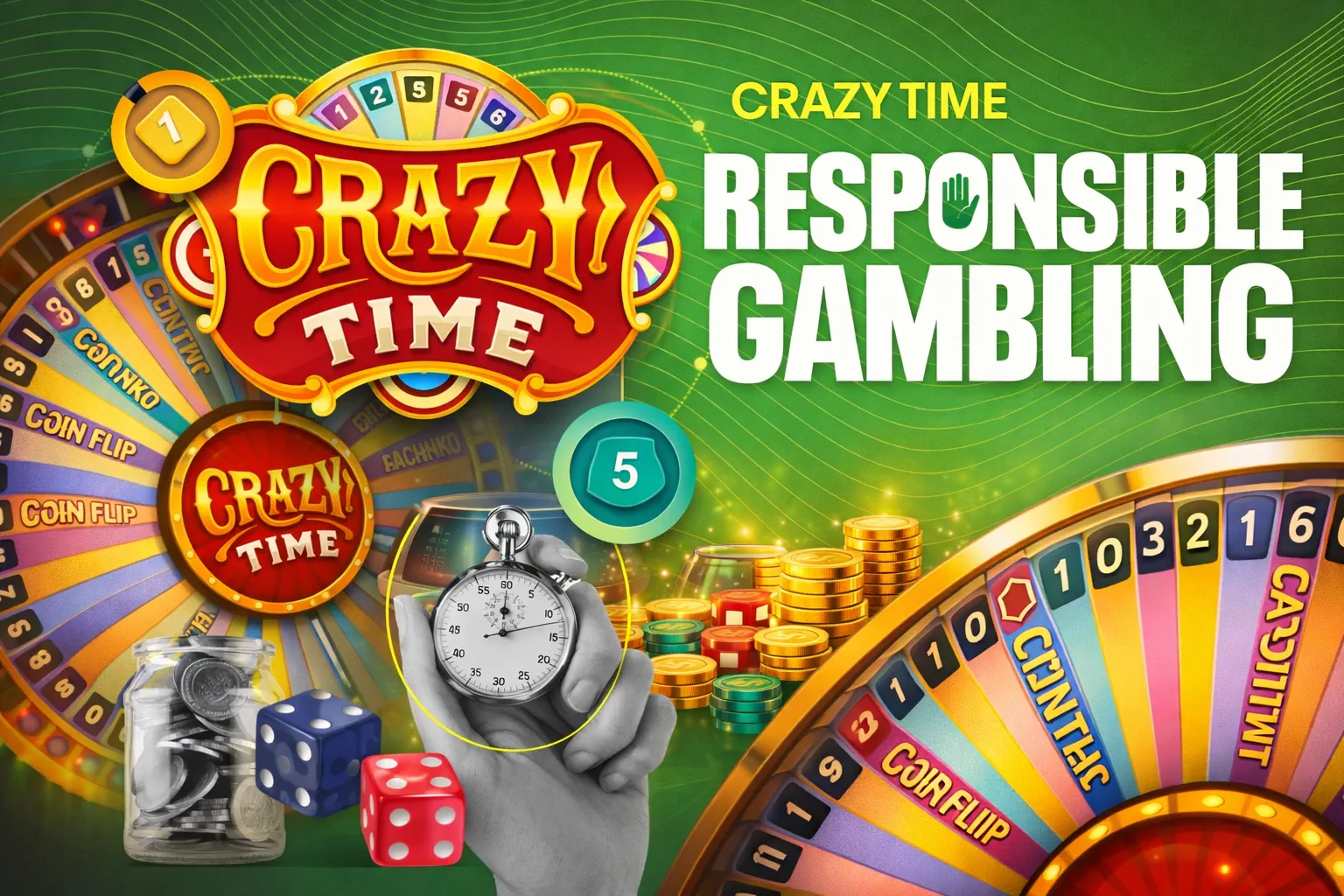
Crazy Time is built to keep your attention. That is not a secret. The wheel spins, the presenter talks, bonus rounds flash up, multipliers jump into view, and the whole thing keeps moving before your brain has fully settled from the last round. That is exactly why responsible gambling matters here.
Not because the game is uniquely evil. Not because people need a lecture. Just because fast live games can mess with judgment if you do not go in with some structure.
For Bangladesh users, this is even more important on mobile. A phone makes access easier, quicker, more casual — and that sounds harmless until a “quick look” turns into forty minutes of spinning, reacting, topping up, and pretending you still have everything under control. Happens all the time.
So this guide is about practical control. Real things. BDT budgeting. Time limits. Avoiding loss-chasing. Knowing when your mood is starting to drive the session instead of the other way around. No fake promises, no saintly tone, no “just be disciplined” fluff. That kind of advice is useless if it does not connect to what players actually do.
And what players actually do, especially in live casino, is get pulled in by pace.
Why Responsible Gambling Matters in Crazy Time
Crazy Time is a chance-based live casino game. That already gives you the first important truth: you are not dealing with something you can fully steer. You can control your choices. You cannot control outcomes.
That difference is where responsible play begins.
Fast Live Rounds and Emotional Pressure
The rounds move quickly. Maybe not at a ridiculous speed, but quickly enough that decisions can start feeling automatic. One spin ends, another begins, and suddenly you are not really choosing with a clear head anymore — you are just continuing.
That is dangerous territory.
When the game is fast, spending can feel lighter than it really is. BDT amounts start turning into button presses instead of money in your mind. And once that happens, control gets weaker. Not gone, maybe, but weaker.
A lot of players think loss of control has to look dramatic. It does not. Sometimes it looks like this:
“I’ll do five more rounds.”
Then fifteen.
Then maybe one bonus will fix the mood.
Then you are annoyed.
That is how it starts.
Bonus Features and Excitement Management
Bonus rounds are one of the biggest reasons Crazy Time feels so addictive to some players. Coin Flip, Cash Hunt, Pachinko, the main Crazy Time bonus — they all create little spikes of anticipation. Near misses make it worse. A bonus almost lands, and suddenly your brain starts acting like the game owes you something.
It does not.
But the feeling is real. That is the problem. Responsible gambling in Crazy Time means understanding that emotional spike and not obeying it every time it shows up.
Here is a quick look at what usually pushes player behavior off track:
| Pressure point | Why it affects players | Better response |
|---|---|---|
| Fast round flow | Less time to think clearly | Set decisions before the session |
| Bonus anticipation | Creates emotional urgency | Treat bonuses as part of the game, not a target |
| Near-miss feeling | Makes players believe something is “close” | Remember each round is independent |
| Mobile access | Makes rejoining and continuing too easy | Use fixed limits before opening the game |
Crazy Time as Entertainment, Not Income
This part sounds obvious until people ignore it. Which they do.
Crazy Time works much better — mentally, emotionally, financially — when you treat it as paid entertainment, not as a way to make money back, build money up, or rescue a bad day.
Setting the Right Expectations
A healthy session starts with a healthy expectation. That means saying something simple and honest to yourself before you even join:
“I might lose this money.”
“I’m here for the experience, not because the game owes me profit.”
“If I get irritated, I stop.”
That kind of thinking is not negative. It is stabilizing.
Too many players come in with half-hidden expectations. Not always saying “I will win,” but quietly feeling like they should. Then the session goes cold, and suddenly they are angry at randomness for behaving randomly. Strange habit. Very common.
Understanding the Random Nature of the Game
No system removes the chance-based nature of Crazy Time. Not pattern watching. Not stats obsession. Not a “balanced approach” somebody posted in a forum. The wheel still lands where it lands.
Responsible gambling depends on accepting that fact properly, not just repeating it because it sounds wise.
Once you accept that the game is random, some things become easier:
you stop expecting justice,
you stop thinking losses are temporary errors,
you stop treating every cold stretch like a personal insult.
Honestly, that shift helps a lot.
Bankroll Control for Crazy Time
This is the backbone. Without bankroll control, the rest of the advice is decoration.
Setting a Session Budget
Before opening the game, decide the exact amount of BDT you are willing to use for that session. Not “around this much.” Not “we’ll see.” A number. A real one.
For example:
1,000 BDT
2,000 BDT
3,000 BDT
Whatever fits your real situation.
Then treat that number as finished money. Entertainment money. Gone the moment the session begins, emotionally speaking. If you cannot comfortably see it that way, that session probably should not start.
A set budget works because it removes improvisation. Improvisation is where bad decisions breed.
Using Fixed Stakes More Carefully
Fixed stakes can help because they reduce the emotional swings inside the session. If your bet size keeps changing every time your mood changes, you are not really managing anything. You are reacting.
And reaction is expensive.
A lot of players do better when they keep the same stake or stay inside a very narrow range. Nothing glamorous there. Still works.
Knowing When to Stop
Stopping rules matter as much as starting rules. Maybe more.
You need a clear point where the session is over. That can be:
when the budget is gone,
when a time limit is reached,
when you feel tilted,
when the game starts feeling stressful instead of fun.
If you only have rules for entering and none for leaving, you are basically trusting your worst future mood to make the smart choice.
Bad plan.
Here is a useful bankroll control table:
| Bankroll habit | Why it helps | Practical version |
|---|---|---|
| Fixed session budget | Prevents open-ended spending | Set a BDT limit before play |
| Flat stake size | Reduces emotional betting swings | Use one simple betting amount |
| Stop-loss point | Creates a clear exit | Leave after the set budget is reached |
| No reload rule | Prevents chasing from becoming automatic | Do not top up mid-session |
Time Management During Live Sessions
Money gets all the attention, but time is sneaky. Very sneaky.
A live game can eat time faster than players notice, especially when the rounds keep flowing and the interface keeps feeding you the next decision.
Setting Session Limits Before Playing
Set a session time before you start. Twenty minutes. Thirty. Forty-five. Whatever fits your routine and your own level of self-control.
Then stick to it.
Do not decide your time limit halfway through a heated session. By then the game already has its hooks in your attention. Make the decision before the first round, while your head is still clear.
This matters a lot for Bangladesh users playing on mobile because phones create that false feeling of casualness. It does not feel like a “session” if you are just holding a phone. But it is a session. And time still counts.
Taking Breaks During Long Sessions
Breaks reset perspective. Even a short pause can stop a spiral before it starts.
If you have been in the game for a while and notice that rounds are blending together, that is a sign. Stand up. Put the phone down. Get water. Look at something that does not spin.
Seriously.
Long live sessions reduce decision quality. That is not philosophy. That is ordinary human behavior.
Here is a simple time-control table:
| Time habit | Why it matters | Better routine |
|---|---|---|
| Pre-set session length | Stops endless “just a few more rounds” thinking | Decide the limit before opening the game |
| Mid-session break | Improves judgment | Pause after a set number of rounds or minutes |
| End-session exit rule | Prevents drifting back in | Leave once your time is up |
| Avoid late-night play | Tired decisions are worse decisions | Play only when your head is clear |
Emotional Control While Playing Crazy Time
This is the hardest part for many players, because emotion never arrives politely. It creeps in dressed as confidence, urgency, irritation, “one more try,” and false logic.
Avoiding Chasing Losses
Chasing losses is one of the clearest warning signs that a session is going wrong.
It starts with a simple thought:
“I just need to recover a bit.”
Then another round.
Then a slightly bigger stake.
Then a bonus almost lands and now you really cannot stop.
That is the trap.
The problem with chasing is not only financial. It changes your mental state. You stop playing the game that is in front of you and start fighting the session that already happened. You are gambling against your own frustration by that point.
Never good.
Recognizing Stress and Impulsive Decisions
A lot of players only notice they are stressed when the session is already a mess. Better to catch it earlier.
Some practical signs:
you are tapping faster,
you stop reading the screen,
you increase stake size for no clear reason,
you feel annoyed when the wheel lands on ordinary sections,
you are not enjoying the game anymore but still do not leave.
That is stress in gambling form. Maybe not dramatic, but definitely real.
When that starts, pause. Not later. Then.
Responsible Gambling on Mobile
This part matters a lot for Bangladesh users because mobile is often the default way people access live casino content. Mobile is convenient. It is also risky in its own sneaky little way.
Why Mobile Play Can Feel Faster
A phone compresses everything. The game is right there. The payments are close. The next round is immediate. There is less physical friction between impulse and action.
That is why mobile play can feel faster even when the actual round speed is unchanged.
Also, mobile hides time well. On desktop, a long session feels long. On a phone, it can feel like you were “just checking” and then somehow an hour vanished. Not ideal.
Simple Mobile Habits That Support Better Control
You do not need some huge anti-gambling system on your phone. You just need a few practical habits.
Turn off distractions. Set a timer outside the game. Keep only the money you planned to use mentally assigned to that session. Do not switch between chat apps, videos, and the game in a half-zoned state. That fragmented attention is exactly where impulsive play thrives.
Simple routines help. Boring routines, even. Boring is underrated.
Here is a mobile-control table:
| Mobile habit | Why it helps | Better practice |
|---|---|---|
| External timer | Keeps time visible | Use your phone timer before starting |
| Simple betting pattern | Reduces rushed decisions | Avoid constant stake changes |
| No instant top-ups | Slows down emotional spending | Step away before adding funds |
| Full-screen focus | Prevents distracted play | Do not mix the session with other apps |
Warning Signs of Unhealthy Play
You do not need to hit rock bottom to notice something is off. Small signs count. Often they are the most useful ones.
Spending More Than Planned
This is the cleanest red flag. You set a budget and then ignored it. Maybe you topped up “just once.” Maybe twice. Maybe you told yourself it still counts as the same session somehow.
It does not.
If spending goes beyond the plan, the session is already outside your rules.
Playing Longer Than Intended
Time overrun matters too. Maybe you planned twenty minutes and stayed for seventy. That is not just a scheduling problem. It usually means the game started setting the pace for you.
Bad sign.
Feeling Pressure to Recover Losses
This one is the emotional core of unhealthy play. If the session starts feeling like a race to repair what already happened, control is slipping.
And yes, hiding gambling behavior from other people counts too. That is another sign people like to pretend does not matter. It matters.
Practical Safer-Play Habits for Beginners
Beginners do not need deep theory. They need a few grounded habits that actually work in normal life.
Keeping Bets Simple
Simple bet structures are easier to manage. Easier to track. Easier to stop.
When players overcomplicate their betting early, they usually lose the thread of what they are doing. Then emotion fills the gap. Better to stay basic.
Avoiding Bonus Chasing
Bonus rounds are exciting. That is exactly why they can pull players into bad habits. A bonus almost lands, and now the next round feels loaded with fake meaning.
Ignore that feeling.
Bonus chasing is one of the quickest ways to turn entertainment into pressure.
Reviewing Your Play Session Honestly
After a session, ask yourself three things:
Did I stick to my BDT budget?
Did I stop when I said I would?
Did I play calmly, or was I reacting?
That little self-check can tell you a lot. Sometimes more than the session result itself.
Support, Self-Checking and When to Pause
A pause is not failure. Sometimes it is the smartest move in the whole session.
If you notice repeated loss-chasing, lying to yourself about limits, spending more than planned, or feeling real stress around the game, step back. Properly. Not a five-minute fake break before diving back in, but an actual pause from play.
Self-checking matters because people are often the last to admit a routine is turning unhealthy. Try to notice patterns early. The earlier, the easier.
If the game is making you tense, urgent, secretive, or financially sloppy, it is time to stop and reset.
Why Responsible Gambling Guidance Matters for Bangladesh Users
Because practical guidance matters most where access is easy and mobile use is common. Bangladesh users often want simple advice they can actually apply, not abstract speeches about psychology or morality.
That is the right instinct.
In a mobile-first environment, safer play depends on small habits:
clear BDT limits,
timers,
breaks,
simple stakes,
not reacting to bonus hype,
not pretending every session needs a comeback story.
When guidance stays realistic, people are more likely to use it.
Building a More Realistic Crazy Time Playing Routine
A realistic routine is not glamorous. Good. Glamour is what gets people into trouble in games like this.
A decent routine might look like this:
set a BDT entertainment budget,
set a time limit,
choose a simple stake plan,
play only when your head is clear,
stop when the session stops feeling fun,
do not reload,
do not chase.
That is not exciting advice. It is useful advice.
And useful beats exciting here.
Frequently Asked Questions about Crazy Time Responsible Gambling
What does responsible gambling mean in Crazy Time?
Basically, it means not letting the game run your session for you. You go in with clear limits, a set BDT budget, and some common sense about how long you want to play. It also means not treating Crazy Time like a way to make money. It is entertainment, and it works much better when you keep it in that lane.
How can I set safer limits while playing?
The best time to do that is before you even start. Pick your budget, decide how long the session gets, and keep your stake size simple. It also helps a lot to know in advance what “done for today” looks like. Once you hit that point, stop — not after one more spin, not after one more bonus try.
Why is chasing losses a problem in Crazy Time?
Because that is usually the moment the session stops being calm and starts becoming emotional. You are no longer just playing — you are trying to force your money back, and that is where people make rough decisions. Bigger bets, faster bets, worse judgment. In a game like Crazy Time, that can get ugly quicker than people think.
Is mobile play harder to control?
Yeah, it can be. On mobile, everything feels too easy. Open the game, tap a few times, keep going, maybe top up, keep going again. Time also slips by weirdly fast on a phone. That is why mobile play needs a bit more structure — timers, clear limits, and no impulsive “just a little more” thinking.
How do I know when I should stop playing?
Usually your own session gives you the answer if you are honest about it. If you already hit your budget, stayed longer than you planned, started feeling irritated, or caught yourself thinking about winning losses back quickly, that is the sign. Also, if the game is not even fun anymore and you are still there . . . yeah, that is a sign too.